


Accelerated Resolution Therapy in Calgary AB
Relief in sessions, not years - without reliving a thing.
Our therapists use ART to rapidly resolve trauma, anxiety, depression, and phobias - often in as few as 1-5 sessions, without retelling your story or spending years on a couch.
🟢 Currently accepting new clients. Online and in-person appointments available.
As Featured In






Rated 5 Stars on Google • 500+ Calgarians Helped
What Sets Our ART Therapists Apart

We Don’t Make You Relive It
A lot of people put off therapy because they dread having to talk through their worst moments in detail. With ART, you don’t have to. You bring the memory to mind privately while your therapist guides the eye movements, and you decide how much of it to put into words. Our therapists respect that boundary from the first session.

We Target What Feels Stuck
If you’ve spent months or years in therapy without the change you hoped for, ART offers a different way in. It was designed as a brief therapy that works directly with the memories and images behind your distress. Your therapist reviews progress with you along the way, so the length of treatment follows your goals rather than a fixed plan.

We Go Beyond Talk Therapy
Talk therapy can help you understand a painful memory. ART is designed to change how it feels. Using a technique called Voluntary Image Replacement, your therapist helps you swap distressing images for ones you choose. You still remember what happened - the aim is for the memory to carry less emotional charge.
Is Accelerated Resolution Therapy Right for You?

Do you have a memory or experience that still hits you with the same force every time it surfaces?
Have you tried talk therapy, CBT, or even EMDR and still feel stuck in the same patterns?
Are you dealing with anxiety, panic, or phobias that no amount of reasoning with yourself can quiet?
Do you avoid therapy altogether because you don't want to spend months talking through painful experiences in detail?
Is your body still on high alert - tense, restless, exhausted - even when nothing is actually wrong?
If any of these sound familiar, ART can help your brain resolve what's driving your distress - often in just a few sessions, not months or years.
What We Treat With ART
ART is effective across a wide range of conditions - not just PTSD. If what you're dealing with is rooted in a distressing experience, a painful memory, or a pattern your conscious mind can't seem to override, ART can likely help.
-
Whether it's a single event or years of repeated experiences, trauma gets stored in the brain in a way that keeps it feeling present. ART targets how that memory is stored - reducing the emotional charge and replacing the images attached to it - so the past stops hijacking your present.
-
Anxiety often runs on a loop your conscious mind can't interrupt. ART works beneath the surface, targeting the specific experiences or triggers wired into your nervous system. Clients frequently describe the shift as the volume on their anxiety finally turning down.
-
Phobias respond exceptionally well to ART because they're typically anchored to a specific image or experience. Using Voluntary Image Replacement, your brain swaps the feared image for a neutral or positive one - and the fear response drops with it, often in a single session.
-
When depression is rooted in unresolved experiences - loss, failure, rejection, things you've carried for years - ART can reach what talk therapy often can't. By reprocessing the memories feeding the heaviness, clients report feeling lighter and more present, not just managing the depression but actually moving through it.
-
Grief doesn't follow a timeline. When you're stuck - replaying the loss, unable to move forward, overwhelmed by images you can't unsee - ART helps your brain process what it hasn't been able to on its own. The love and the memories stay. The pain that's keeping you frozen shifts.
-
The habit is rarely the real problem. Addiction almost always runs on something deeper - a wound, a memory, a feeling you've been numbing. ART targets what's underneath, reprocessing the experiences fueling the cycle. When the root loses its charge, the grip of the behavior loosens with it.
-
Stage fright, creative blocks, athletic choking, test anxiety - these often trace back to a specific moment where things went wrong and the brain locked in a fear response. ART can resolve that original scene quickly, freeing you to perform without the weight of past failure running in the background.
Your Accelerated Resolution Therapy Journey With Us
1. Finding Where to Aim
We start with a focused conversation about what's bringing you in and what you want to be different. You don't need to narrate your trauma - just enough for us to know where to aim. Most clients are surprised how little they need to share for ART to work.
2. Seeing the Scene Shift
This is where ART does what nothing else does. Using guided eye movements, your brain reprocesses the distressing experience in real time. Then, through Voluntary Image Replacement, you swap the images that have been haunting you for ones you choose. The memory stays - but what you see and feel when it comes up fundamentally changes.
3. Noticing What's Different
After processing, we revisit the original memory together. Most clients are caught off guard by how neutral it feels - the thing that used to flood them with emotion just... doesn't anymore. We make sure the shift is solid before you leave.
4. Carrying it Forward
The changes from ART tend to hold. In follow-up sessions, we check how the relief is showing up in real life - the trigger that used to flatten you barely registers, sleep comes easier, your reactions finally match the situation. If there's more to work on, we go again. If you're done, you're done - and that's the goal.
Meet Our ART Therapy Team

Muhammed Karbani, BSc, MC, Canadian Certified Counsellor
Hi, I'm Muhammed. If you're looking into ART, you've probably already figured out that talking about the problem isn't the same as resolving it. That's what drew me to this approach too.
ART lets me help clients get to the root of what's driving their distress - and actually change it - without months of processing and without asking you to relive the painful parts. Whether it's trauma, anxiety, something you can't quite name, or a pattern you can't seem to break, ART works with how your brain stores the experience, not just how you think about it.
I'm warm, I'm direct, and therapy with me feels like a real conversation. I'm trained and certified in ART, and I've seen what it can do when it's delivered the way it's meant to be. If you're skeptical, that's fine. You don't need to buy in on day one. You just need to show up.
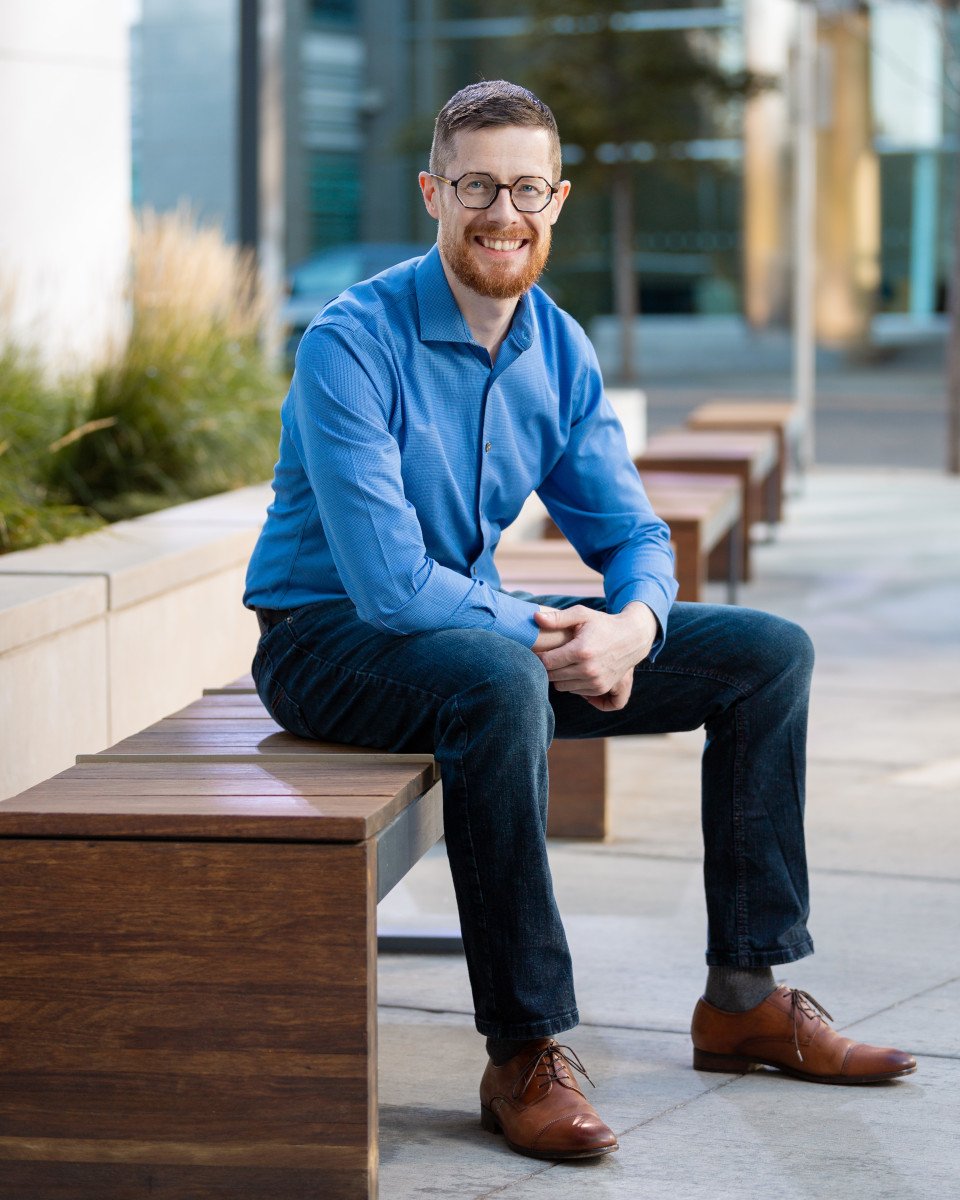
Rod Mitchell, MC, MSc, Registered Psychologist
Hi, I'm Rod - founder of Emotions Therapy Calgary.
Why ART? The first time I watched a client go from braced and guarded to genuinely confused about why the memory didn't hurt anymore - in a single session - I knew this needed to be part of what we offer.
ART isn't the right fit for every situation. But when it fits, the speed and depth of the change is unlike anything else I've seen in clinical practice. That's the standard Muhammed brings to every ART session here, and it's why I trust him with this work.
When you're ready, we're here.
Frequently Asked Questions
-
They share some DNA, but they work differently in practice.
Both use eye movements and both treat trauma. The key differences:
Speed - ART follows a more structured, directive protocol. Most clients see results in 1-5 sessions, compared to the 8-20 EMDR typically requires.
Image Replacement - EMDR helps your brain reprocess a memory so it becomes less distressing. ART takes it further - you actually change the images your brain attaches to the memory. The facts stay. What you see and feel when it surfaces shifts.
Verbal disclosure - EMDR may involve some verbal processing. ART requires very little - you hold the memory internally while your therapist guides the eye movements.
Neither is universally better. EMDR may suit complex, layered trauma that needs gradual unravelling. ART tends to shine when you want targeted, rapid relief. We offer both and can help you decide which fits during a free consultation.
-
Most clients experience significant relief within 1-5 sessions. Research shows an average of roughly 3.7 sessions to meaningful improvement.
Single-issue concerns (a specific memory, a phobia, a panic response) - often 1-3 sessions
More layered situations - may take more, but still substantially faster than most approaches
The speed isn't because ART cuts corners. The protocol is designed to access and resolve distressing material efficiently, and Voluntary Image Replacement gives your brain a concrete alternative to anchor to - rather than just "letting go" of the old response.
Many clients notice a shift within the first session. Not a subtle one - the kind where you try to bring up the memory and it genuinely doesn't land the same way.
-
Yes. ART was recognized as an evidence-based treatment by the Substance Abuse and Mental Health Services Administration (SAMHSA) in 2015 - specifically for trauma-related disorders, depression, and resilience.
Randomized controlled trials with military veterans showing significant PTSD symptom reduction
Cohort studies demonstrating lasting improvements in depression, anxiety, and sleep quality months after treatment
A 94% treatment completion rate - significantly higher than the 60-65% typical of traditional trauma therapies, suggesting clients find ART more tolerable
Ongoing research at institutions including Yale University and the Canadian Armed Forces
ART is newer than EMDR or CBT, so the research base is still growing. But what exists is strong - and the clinical results are consistent with what the studies show.
-
No. ART is specifically designed to process trauma without reliving it. You don't narrate the experience out loud, and the guided eye movements keep you grounded in the present while your brain does the processing internally.
Some clients experience brief emotional intensity during a session - that's normal. But the protocol includes built-in steps to make sure you leave feeling stable, not stirred up. Most clients tell us ART felt far less overwhelming than they expected. Many say it was easier than the weeks they spent dreading it.
-
No - and this is one of ART's biggest advantages. You only need to hold the memory in your mind during processing. Your therapist guides the eye movements - you don't need to describe, explain, or narrate what you're seeing. Your brain does the work internally.
This makes ART especially helpful for people who've avoided therapy because they dread retelling painful experiences, and for anyone who processes better internally than verbally.
-
Surprisingly calm. You're awake, aware, and in control the entire time.
Your therapist will ask you to bring a distressing memory to mind while guiding your eyes in specific movements. You'll notice the memory shifting - the emotional intensity dropping, the images changing. Some people describe it as watching a movie that gradually loses its power. Others say it just feels like the weight lifts.
Afterward, you might feel tired, lighter, or a bit emotionally tender - similar to how you'd feel after a hard workout. By the next day, most clients report feeling noticeably different around the memory they processed.
The most common thing we hear? "That's it? I thought it would be so much harder."
-
More than most people expect. ART was developed for PTSD and trauma, but if your symptoms are rooted in a distressing experience - and most are - ART can likely help.
Trauma and PTSD - single incidents or repeated experiences
Anxiety and panic attacks
Phobias
Depression - especially when connected to past experiences
Grief and loss
Addiction - targeting the underlying experiences that fuel it
Performance issues and creative blocks
ART targets how distressing experiences are stored in the brain - not just the symptoms they produce. If you're unsure whether it fits what you're dealing with, that's exactly what the free consultation is for.
-
Yes, with the right pacing. ART is well-suited to complex and childhood trauma because it doesn't require you to narrate events you may not have full memory of - or words for. Your brain does the processing; you don't have to explain.
That said, layered trauma usually isn't a one-session resolution. A few things shape how we approach it:
We move at your nervous system's pace. Complex trauma often comes with a dysregulated system, so we start with stabilization before targeting specific memories.
We target one thread at a time. Rather than trying to process everything at once, we work on the most active memory or pattern first and let the relief build from there.
We integrate other approaches when needed. Some clients benefit from combining ART with somatic work or EMDR for certain layers - we'll tell you honestly if that's the case.
The free consultation is the right place to talk through your history and figure out whether ART alone is the right fit, or whether a blended approach would serve you better.
-
Sessions are $210 with our Canadian Certified Counsellors and $235 with our Registered Psychologists. Your initial free 20-minute consultation is not a therapy session - it's a chance to ask questions and find out if ART is a fit before committing.
Because ART typically requires fewer sessions than traditional therapy, the total cost of treatment is often lower - even if the per-session rate is comparable. Many clients complete treatment in 1-5 sessions rather than months of ongoing appointments. Extended health benefits, Health Spending Accounts, and Employee Assistance Programs can all help reduce out-of-pocket costs.
-
Yes - most extended health plans in Alberta cover ART when provided by a Canadian Certified Counsellor or Registered Psychologist. ART isn't listed separately on plans because it's a technique, not a provider category. What matters is the credentials of the therapist.
Before booking, check your plan for your annual maximum for counselling or psychology services, any per-session limits, and whether a referral is required - most don't. Most Alberta employer plans through Blue Cross, Manulife, Sun Life, and Canada Life cover counselling services.
Ready to find out what a few sessions could change?
You've read what ART is, how it works, and who you'd be working with. The only thing left is a 20-minute conversation to see if it's right for you - and if a different approach suits your situation better, we'll tell you.